Threshold ArcEstablishing the Civilian Controlled-Arousal Laboratory
An open invitation to clinicians, researchers, performance specialists, and mental health practitioners
There is a facility that most clinicians do not know exists.
It is not a hospital. It is not a simulation center. It is not a research lab in the traditional sense. It is a USPA-regulated skydiving drop zone — an active, federally governed, operationally mature environment where reliable autonomic activation can be safely induced, continuously measured through biometric capture, and replicated on any operational day of the year.
To the best of our knowledge, this configuration — a daily-available, real-world physiological stressor embedded within a clinically-designed measurement and integration protocol — does not currently exist anywhere else in the civilian sector.
That gap is what this organization exists to document. And if that sentence made you curious rather than skeptical, keep reading.
What we are building
The Threshold Arc protocol is a single-day, structured exposure-based intensive designed for adjunct use within an existing therapeutic relationship. It is not therapy. It does not replace clinical care. It is built around a specific clinical problem: patients who have plateaued in talk-therapy-based treatment and for whom a structured, controlled, high-arousal somatic intervention may generate material the ongoing work can build on.
The core event is a tandem skydive from 14,000 feet at a USPA-certified drop zone — an FAA- and USPA-governed activation event delivered within a phase-structured day that includes baseline measurement, psychoeducation, individual preparation, stabilization, the exposure event, and post-event integration. Continuous heart rate variability capture using industry-leading biometric technology is administered throughout. Validated psychometric instruments (PCL-5, PHQ-9, GAD-7) are administered pre- and post-event. A structured clinical summary is delivered to the referring clinician within seven to ten days.
The data belongs to the patient and their clinician. The diagnostic interpretation belongs to the clinician. The Threshold Arc delivers a discrete, high-signal event and a structured pre/post measurement package. What the clinician does with it is their domain — and that is by design.
The laboratory
What makes the Threshold Arc configuration clinically significant is not the event itself — it is the measurement architecture built around it.
We have constructed a modular, plug-and-play laboratory framework at an operational USPA-certified drop zone. The core infrastructure is continuous HRV capture using industry-leading biometric technology — but the architecture is deliberately designed to accept additional measurement batteries depending on the research question being asked. A collaborating researcher or clinician does not need to build a facility. They need a question. We have the environment, the activation event, the physiological measurement layer, and the structured clinical framework to wrap around whatever they bring.
The activation event itself is not simulated. It is real. That distinction matters clinically. The autonomic response produced by a genuine, voluntary, high-consequence physical event is categorically different from what can be achieved through imagery, simulation, or laboratory-controlled stressors. The Threshold Arc is one of the only civilian settings in which that level of authentic physiological demand can be produced reliably, repeatedly, and within a structured measurement context.
If you have the question, we may have the environment to test it. → Inquire
Where we are
The Threshold Arc protocol is in active development. The clinical architecture — the psychometric battery, the biometric measurement layer, the structured handoff framework, and the phase-structured day — has been built and refined. The operational foundation is in place.
What built it was not a single insight or a single year of work. It is the product of more than a decade of active immersion in the skydiving world — thousands of jumps, years as a tandem instructor, and sustained firsthand exposure to how people respond at the edge of genuine physiological demand. That experience, over time, produced something that is difficult to acquire any other way: a working map of human behavioral and physiological patterns under real activation conditions.
That map became more clinically legible when it intersected with years of work inside a behavioral therapy organization. The clinical and therapeutic framework that environment provided, combined with what skydiving had already made visible, produced an intersection that the field has not yet formally named. Sustained engagement with veterans over a subsequent period added further signal — more patterns, more clinical observation, more evidence that what was being seen in the drop zone environment was not incidental.
Out of that accumulation, a broader framework emerged. The Threshold Arc is one application within it — the one this organization is built to document, study, and develop. Other applications are taking shape within the same ecosystem. This document is about the Threshold Arc.
Early observation is not evidence. The protocol has not been formally studied. There is no control condition. The right response to that is not to wait — it is to build the research structure now. That is what this organization exists to do.
The clinical populations we are designed to serve
The treatment-plateaued patient
Individuals currently engaged in an active therapeutic relationship who have stalled: the talk-based approaches have been exhausted or have reached a ceiling, insight is present but not translating into movement, and the clinician is looking for something that can create new material to work with. Specific presentations include:
- PTSD (F43.10), treatment-plateaued
- Specific phobias (F40.x)
- Adjustment disorders (F43.2x), particularly those involving significant life transition
- Generalized anxiety (F41.1), especially performance-linked presentations
- Executive and performance burnout
- Post-achievement disorientation
- Grief with avoidance features
Patients from high-consequence environments
Military personnel and veterans, first responders, law enforcement, firefighters, emergency medical technicians, paramedics, emergency dispatchers, trauma surgeons, emergency room staff, critical care nurses, behavioral health practitioners, and hospice workers share something clinically relevant: they have been operating in environments where stress was not managed so much as absorbed, suppressed, or normalized. Many of them are not afraid of intensity — they are numb to it, avoidant of processing it, or have lost contact with their own physiological signals entirely.
The Threshold Arc produces a controlled, real-world autonomic activation event in a structured clinical context, which gives the referring clinician observable data about how a patient's nervous system responds to and recovers from genuine physiological demand — data that is not available in a therapy office. For populations who have learned to mask, suppress, or disconnect from their own arousal responses, this kind of event can surface what language alone has not been able to reach.
There is also an organizational dimension to this work that we are actively exploring. Retention, attrition, and functional degradation in high-consequence professions are not primarily HR problems — they are physiological and psychological ones. Burnout, secondary traumatic stress, moral injury, and accumulated autonomic load take people out of roles their organizations cannot afford to lose. Organizational resilience, in these environments, is a measurable outcome tied to how individuals process, regulate, and recover from sustained demand. We are interested in connecting with organizations, clinicians embedded within them, and researchers studying these dynamics — particularly those asking what the data can reveal about the individual and systemic variables that determine who sustains capacity over time and who exits.
Applied human performance and high-functioning populations
Not every person who belongs in this protocol is symptomatic. There is a distinct and underserved population that arrives not from clinical distress but from a ceiling — individuals who are performing well by conventional measures but sense that they are operating beneath their own capacity. Elite athletes, executives, performers, and high-functioning professionals navigating significant transitions often share a common challenge: they have optimized everything available to them at the cognitive and behavioral level, but have not yet accessed the somatic and autonomic dimension of their own performance.
The Threshold Arc's real-world activation event, paired with continuous HRV capture and structured reflection, offers something performance psychology has largely been unable to provide in a controlled setting: a genuine test of the autonomic nervous system under authentic pressure, with measurement data that can inform the performance work that follows. We are actively exploring collaborations with sports psychologists, human performance specialists, and coaches who are looking for a laboratory-quality environment to test, observe, and develop their highest-functioning clients.
This population also represents a natural entry point for studying the upper range of autonomic regulation — what exceptional regulation looks like under genuine demand, and what the data reveals about the difference between those who perform well in simulation and those who perform well when it is real.
If one of these populations describes your current caseload or practice, the inquiry form at the bottom of this page is the right next step.Why this organization exists
The Threshold Arc is a commercial protocol. The experiential intensive is a paid service delivered through SKYFORGE Leadership LLC. If you are interested in the referral process, clinical documentation, or patient-facing materials, that information lives at ThresholdArc.com.
ThresholdArc.org exists for a different purpose.
What is happening at a drop zone configured as a controlled-arousal laboratory — embedded within a clinical measurement framework — is something that has not been formally documented, studied, or described in the literature. The theoretical basis is not new: prolonged exposure therapy, somatic experiencing, polyvagal theory, stress inoculation theory, and Lyng’s sociological framework for voluntary risk-taking each offer grounding for what we observe. But the specific combination — a real, daily-available physiological stressor, a continuous biometric measurement layer, and a structured clinical handoff — is novel in the civilian context.
Novel things need documentation. They need clinical engagement. They need people who are willing to observe, question, challenge, and contribute. This site is where that process begins.
Who this is for — and who it is not
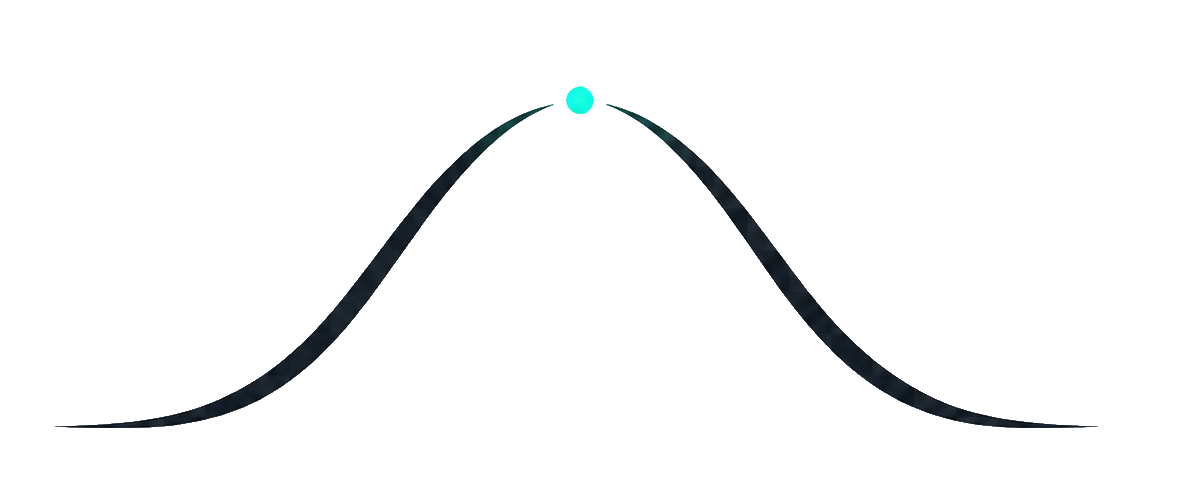
Here is an honest use of the bell curve.
If you are the kind of clinician who needs a completed randomized controlled trial, a systematic review, and a consensus statement from your licensing board before you are willing to consider a new intervention — we respect that position entirely. It is a defensible clinical stance. Come back in two years. We hope to have something worth your review by then, and we mean that sincerely.
This site is not for that clinician right now. This is for the clinicians, researchers, and practitioners sitting in the front half of that curve — the ones who build the evidence rather than wait for it. You are probably the practitioner who already operates at the edge of what conventional practice alone can offer. You have explored or seriously considered modalities that lacked a full evidence base but had compelling theoretical rationale and enough anecdotal clinical signal to warrant attention. You have referred patients to things that made your colleagues raise an eyebrow. You have read outside your training. You have thought, more than once, that the field is moving too slowly for the patients or the performers in front of you right now.
You do not need certainty to engage with a serious clinical question. You need intellectual rigor, transparency about what is and is not yet known, and a framework you can evaluate on its merits. If that description fits — this is for you.
What this site is and is not
ThresholdArc.org is a research and education initiative. It is not a peer-reviewed journal, a credentialing body, or a clinical oversight organization. It does not make diagnostic claims or treatment recommendations.
What it will publish, as the protocol generates data and relationships generate collaboration:
- Outcome reports. De-identified, aggregate pre/post psychometric and HRV arc data from protocol participants — published with appropriate statistical context and honest acknowledgment of early-stage limitations.
- Framework documentation. The Threshold Arc psychoeducation framework — the model used to orient participants to the structure and purpose of the day — published in full and openly available for clinician review, critique, and adaptation.
- Case observations and clinical commentary. Co-authored observations from referring clinicians who have documented what they observed following a patient’s participation.
- White papers and theoretical contributions. HRV as a therapeutic outcome marker, prolonged exposure theory in compressed single-session formats, stress inoculation and the autonomic nervous system in high-consequence populations, applied human performance, and the neuroscience of controlled-arousal events in clinical contexts.
- Research partnership announcements. As collaborations with academic institutions, VA programs, and independent researchers develop, they will be documented here.
If you want to be notified when outcome reports and white papers are published, enter your email below. That is the only thing the newsletter is for.
The open invitation
We are not looking for endorsements. We are looking for honest engagement from people who take the clinical questions seriously.
If you hold a clinical, research, or academic position in mental health, human performance, or a related field, and any of the following describes your current thinking or your caseload, we would like to hear from you:
- The use of controlled high-arousal exposure events as adjunct interventions for treatment-plateaued patients
- Heart rate variability as a clinical or performance outcome marker, and what pre/post HRV arc data can and cannot tell us
- Stress inoculation theory and its application in therapeutic rather than preparatory contexts
- The neuroscience of genuine physiological activation — what is actually happening in the autonomic nervous system during a real, high-stakes event, and how that differs from simulation or imagery-based approaches
- Underperforming behaviors in high-consequence populations: avoidance, emotional blunting, suppression, and what interventions have proven capable of moving them
- Applied human performance and the intersection of somatic regulation with sustained occupational or competitive capacity
- Organizational resilience in high-consequence professions — retention, attrition, and the physiological and psychological variables that determine sustained capacity
- The design and measurement challenges of single-session intensive interventions — what they can and cannot accomplish, and how to structure them to generate clinically useful data
- Critical perspectives on any of the above
If you are a clinician, therapist, psychologist, or performance specialist who has been looking for a structured, high-signal adjunct for the patients or clients your current tools have not been able to reach — this is a direct invitation to explore what a referral relationship looks like. The operational materials are at ThresholdArc.com.
If you are a researcher with an interest in designing a formal study around this framework, we would rather have that conversation now than after the protocol has been running at scale without a research structure. The laboratory is operational. The measurement architecture is in place. The activation event is real and repeatable. What is missing is the research partnership. If you have the question, we may have the environment to test it.
If you represent a nonprofit organization working within any of the populations described in this document — veterans, first responders, high-consequence professions, underserved clinical populations — we are actively interested in partnership. Grant-funded research is something we are pursuing, and we would rather build that infrastructure with organizations already embedded in these communities than after the fact. If your mission intersects with these questions, reach out.
If you are a clinician who is simply curious — who has not referred anyone and may never refer anyone — but finds this territory intellectually interesting and wants to follow what develops, that is reason enough to be here.
Three ways to engage
Choose the option that reflects where you are right now.
Clinical Inquiry
Threshold Arc is a clinician-referred, single-day experiential intensive that gives referring clinicians measurable psychometric and biometric data on their patients — delivered as a structured clinical report within seven days of the event.
Research & Collaboration
For researchers, academics, and nonprofit organizations interested in partnership, co-investigation, or grant-funded study.
Stay Informed
Receive notifications when outcome reports, white papers, or research partnership announcements are published. Nothing else.
How to engage
Tell us who you are, what your clinical or research background is, and what specifically interests you. We will respond to every inquiry personally. We will not route you to a sales process.